Richard Marshall MBE has been featured by MyLondon News, sharing the story of how leaving school at 15 became the beginning of an unconventional journey into barbering, entrepreneurship and international business. The feature looks at Richard’s early struggles with dyslexia, his first steps in barbering, the development of Pall Mall Barbers and the experiences that eventually took the business from London to New York.
The story is not simply about business growth. It is about persistence, practical learning, and refusing to allow an unconventional beginning to determine what comes next. Today, Richard is the Founder & CEO of Pall Mall Barbers, a British barbering and men’s grooming business with locations in London and New York, but the journey began far away from international expansion, government meetings and national recognition.
Richard left school at the age of 15 after struggling academically with dyslexia. Traditional education had not provided an environment in which he felt able to demonstrate his potential, and he entered working life without the academic qualifications normally associated with a future business leader. Barbering became the place where that potential started to develop.
Read More here: https://www.mylondon.news/news/real-life/i-left-school-15-now-34613285
Leaving School Became the Beginning of a Different Education
Leaving school at 15 did not bring Richard’s education to an end. It changed the way he learned. His early working experience began in a barber shop in Bedford, where he started at the bottom, helping around the shop and learning by watching the people around him. That environment gave Richard something traditional education had struggled to provide. Barbering was practical, and progress could be seen through repetition, observation, communication, and experience.
The barber shop became a different kind of classroom where every client created another opportunity to understand people, every working day offered a chance to improve, and every mistake became something that could be corrected through practice. Richard gradually developed not only barbering skills but also the interpersonal abilities that would later become central to his approach to business.
Listening mattered, remembering clients mattered, understanding what people wanted mattered, and delivering consistently mattered. The fundamentals of customer service, trust and retention were being learned long before Richard began describing them in business terms.
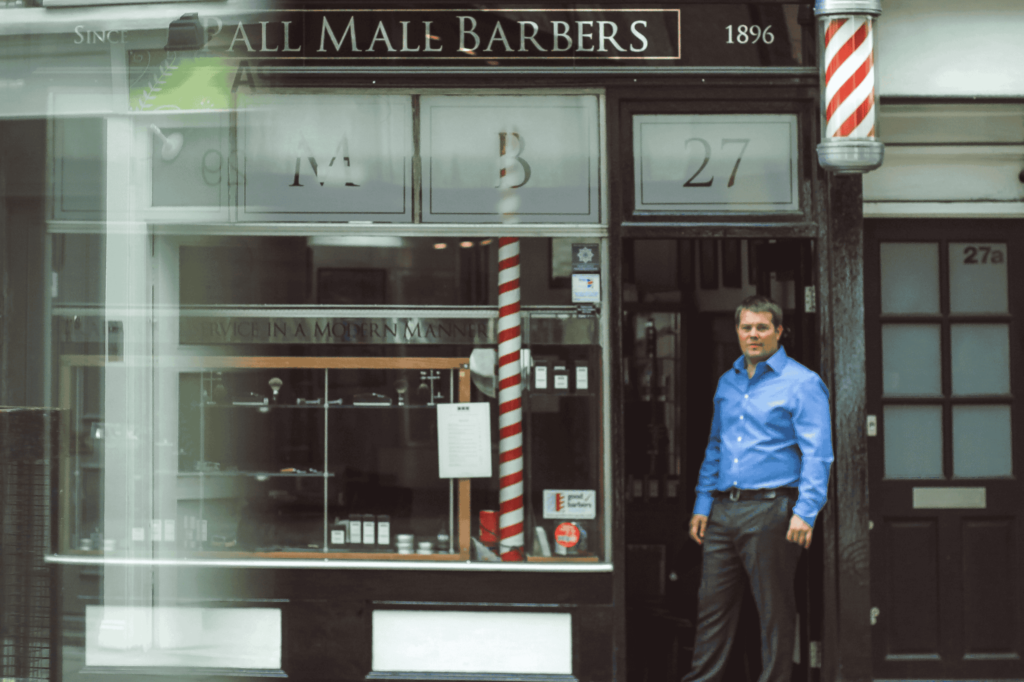
Dyslexia Became Part of Richard Marshall’s Business Story
Dyslexia remained a genuine challenge throughout Richard’s development. Reading documents, understanding written information, and navigating the administrative side of business could require additional support and effort. Richard has spoken openly about relying on other people at different points when he needed help understanding contracts or complex written material.
Those experiences became part of the way he approached problems. Rather than pretending to understand everything, Richard learned to ask questions. Rather than allowing a difficult document to become the end of a conversation, he found someone who could explain it. Instead of allowing one method of learning to define his ability, he developed other ways to understand the world around him.
That approach became increasingly relevant as he moved from barbering into entrepreneurship. Dyslexia was not something that disappeared when Richard became successful. It remained part of his life and ultimately became one of the areas in which he chose to speak publicly and support other people. His story demonstrates that difficulty and capability can exist at the same time.
Moving to London Expanded the Ambition
Richard moved to London in his early twenties and worked as a barber in Mayfair. London presented a larger market, a different clientele and greater opportunities, while also strengthening his ambition to own a business. Richard did not come from a family of established entrepreneurs with a ready-made business network, so he had to learn how ownership worked by asking questions, speaking to people and gradually understanding areas such as property, leases, finance and commercial decision-making.
There were occasions when he was not taken seriously, but his response was to keep asking. That persistence became one of the recurring characteristics of his career. Entrepreneurship did not begin with Richard knowing exactly what he was doing. It developed from being willing to learn what he did not yet understand.
The Opportunity at Whitcomb Street Changed the Direction of the Business
Richard eventually learned about a barber shop at 27 Whitcomb Street near Trafalgar Square. The premises required significant work, but he saw potential in the location and the business. In 2005, he took over Pall Mall Barbers, marking a major step from working as a barber to becoming responsible for the future of a business.
There was no immediate transformation into a polished brand. Richard continued working with clients while also dealing with the practical realities of improving the shop and building the business. That meant long days and additional work outside normal opening hours. The business had to earn its future one decision at a time.
Discovering the History of Pall Mall Barbers Added a New Responsibility
During renovation work at the Whitcomb Street premises, Richard discovered historical material connected with the shop. Further research revealed a barbering history associated with the address stretching back to 1896. That discovery changed the significance of the business. Pall Mall Barbers was no longer simply a barber shop Richard had acquired; it was connected to a much longer London story.
The responsibility became one of protecting valuable elements of the past while building something that remained relevant for modern clients. That principle became an important part of the Pall Mall Barbers identity through the idea of Modern Heritage. History should provide a foundation rather than become a restriction. Traditional barbering values such as consultation, service, consistency, and the relationship between barber and client could remain important while technology, booking systems, locations, communication, and customer expectations continued to evolve.
Pall Mall Barbers Grew Through Consistent Progress
Richard’s ambition extended beyond one barber shop. Growth developed gradually as Pall Mall Barbers expanded into additional London locations. Each new store created another set of responsibilities. A larger business meant more operational complexity, more financial decisions, more people, and greater pressure to create consistency. Growth required Richard to move beyond thinking only like a barber and increasingly consider leadership, systems, marketing, customer experience, property, recruitment, financial management, and long-term direction.
The business began changing. Richard had started his career learning how to serve one client in one barber chair, but he now had to consider how the same principles could work across multiple locations.
International Expansion Took the Story Beyond London
The next stage of Pall Mall Barbers’ development took the business into the United States. New York represented both an opportunity and a significant test because international expansion requires more than reproducing a successful domestic business in another city. The customer environment changes, regulations change, costs change, employment structures change, competition changes, and local expectations change.
A British company therefore needs to understand which parts of its identity should remain consistent and which parts need to adapt. Pall Mall Barbers eventually established a presence at Rockefeller Center in Midtown Manhattan, representing an important milestone in Richard’s journey from a young barber in Bedford to an entrepreneur operating across two major global cities.
British Heritage and New York Ambition Became Part of the Same Story
London and New York are very different cities, but both reward businesses that understand pace, professionalism and customer expectations. The international expansion of Pall Mall Barbers showed that British heritage could travel when supported by a proposition that remained relevant to the local customer.
For Richard, seeing people in New York recognise the Pall Mall Barbers name from London demonstrated that the business had begun to develop beyond an individual location. A local barber shop had become an international brand, but that transition did not remove the importance of the barber chair. It made the principles behind the barber chair even more important. Trust still mattered, listening still mattered, consistency still mattered, and the client experience still mattered.
Growth Also Included Difficult Periods
No serious entrepreneurial story is defined only by expansion. Business ownership also involves periods when the objective changes from growth to survival. Pall Mall Barbers had to navigate significant disruption, including Brexit and the COVID-19 pandemic. The pandemic was particularly difficult for a business built around physical barber shops and face-to-face services.
When barber shops were unable to operate normally, one of the central revenue-generating activities of the business effectively stopped. The experience tested leadership, financial resilience and the ability to make decisions under uncertainty. Those periods became part of Richard’s development just as much as the successful openings. Leadership is not demonstrated only when opportunities are expanding; it is also demonstrated when circumstances become difficult, and the future is unclear.
The Barber Chair Remained Central to the Business Philosophy
Despite the expansion of Pall Mall Barbers, the barber chair remained at the centre of the brand because that is where trust begins. A client sits down and explains what he wants, what has become difficult to manage, and how he needs his appearance to work in everyday life. The independent barber listens, and a relationship begins to develop through repeated appointments. That interaction has always been about more than simply shortening hair.
People talk in barber shops about work, family, relationships, ambitions, stress, travel, business, and everyday life. Richard has repeatedly highlighted the importance of those conversations. The barber shop can provide an environment where men feel comfortable talking naturally, without the interaction needing to become formal or forced.
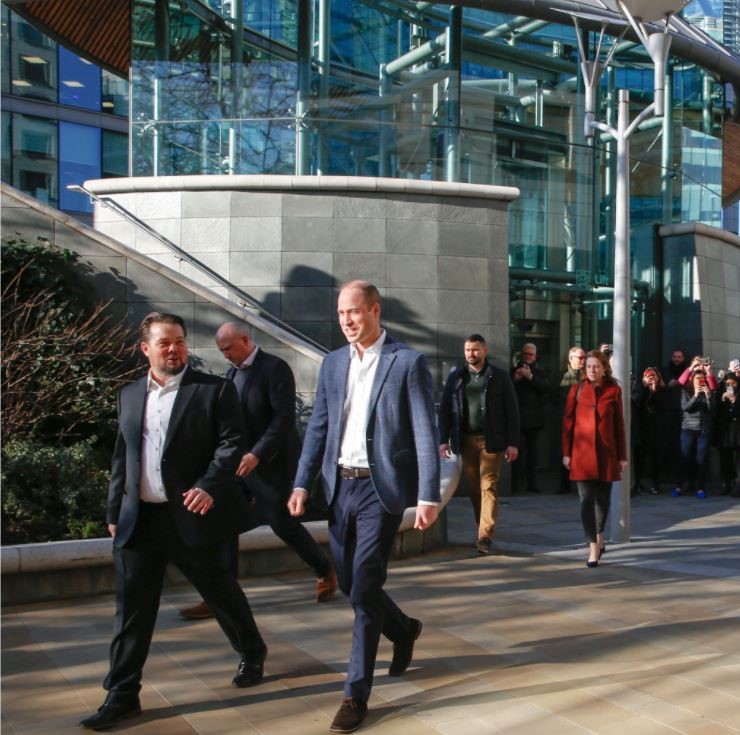
Prince William’s Visit Highlighted the Human Side of Barbering
One of the most recognised moments in the Pall Mall Barbers story came in 2019 when Prince William visited the Paddington location as part of work connected with conversations around men’s mental health. The significance of the visit extended beyond royal recognition because it highlighted something Richard had already observed throughout his career. Barbers often develop long-term relationships with clients, and those relationships create opportunities for conversation.
A barber may see the same client regularly over many years and become familiar with changes taking place in his work, relationships, family life, and general well-being. The barber chair therefore occupies a distinctive place in many men’s lives. The service may begin with grooming, but the human interaction can become equally meaningful.
Richard Marshall MBE & Pall Mall Barbers
As Pall Mall Barbers grew, Richard increasingly became involved in conversations beyond the immediate operation of the company. Small business, entrepreneurship, international trade, dyslexia and mentoring became important parts of his wider work. His experience gave him a perspective shaped by practical business ownership. He had experienced the difficulties of starting without a traditional business education, dealt with the realities of running physical locations, expanded internationally, navigated difficult economic conditions and understood what it felt like to be underestimated.
Those experiences gradually became part of his personal brand. Richard Marshall was no longer speaking only as the founder of Pall Mall Barbers. He was increasingly speaking as an entrepreneur who had learned through experience and wanted that experience to become useful to others.
Supporting Small Businesses Became Part of the Next Chapter
Richard later became involved in government discussions concerning small and medium-sized businesses. His appointment to the UK Government’s SME Council reflected his growing contribution to conversations around entrepreneurship and the environment required for smaller companies to grow. This represented a significant progression in the story. The young barber who once needed to ask basic questions about how to acquire business premises had developed enough experience to contribute to discussions affecting other entrepreneurs.
The connection is important because Richard’s interest in small business policy is grounded in practical experience rather than theory alone. He understands that business owners often operate under pressure from rent, wages, financing, business rates, energy costs, recruitment challenges, cash flow and changing consumer behaviour. Supporting SMEs means understanding how those pressures interact with ambition.
Richard Marshall MBE Marked a Significant Milestone
Richard Marshall was appointed a Member of the Order of the British Empire in the 2026 New Year Honours, with the recognition awarded for services to international trade, mentoring and people with dyslexia. Those areas reflect the broader development of Richard’s career. International trade represents the journey from a local barbering business into international markets, mentoring represents his commitment to helping other people progress, and dyslexia represents one of the personal challenges that shaped his early life and continues to influence the way he talks about opportunity. The MBE therefore represents more than recognition for building a successful company. It recognises the way Richard has used his experiences beyond his own business.
Dyslexia Remains Central to Richard Marshall’s Message
Richard continues to speak publicly about dyslexia because his experience can provide perspective for other people facing similar challenges. A young person struggling academically may assume that poor performance in one environment reflects a lack of ability, but Richard’s journey provides a different example. His strengths developed through practical learning, communication, persistence, problem-solving, and the willingness to seek help in areas where he struggled.
That does not mean everyone with dyslexia will become an entrepreneur. It does mean academic difficulty should not automatically be interpreted as limited potential. People learn differently, build careers differently, and develop confidence at different stages. Richard’s story demonstrates that an alternative route can still become a meaningful route.
The barber shop taught Richard through direct experience. He learned how people respond when they feel listened to, why clients return, how reputation is built through repeated delivery rather than one impressive moment, and how important relationships are in business. He also learned that confidence does not require knowing everything. Sometimes confidence means knowing who to ask. Those lessons continued to influence his approach as Pall Mall Barbers expanded. The environment changed, but the principles did not.
Richard experienced situations where people did not immediately see what he was capable of building. Those experiences could have become permanent limitations, but instead they became motivation. Being underestimated is not automatically an advantage, but the response to it can become significant. Richard continued learning, meeting people, asking questions, and looking for opportunities. He continued building evidence of what was possible through action. Over time, the gap between how he had once been perceived and what he had actually achieved became increasingly clear.
Modern Heritage Reflects Richard’s Own Journey
The idea of Modern Heritage applies not only to Pall Mall Barbers but also to Richard’s personal story. His approach respects where the business came from while accepting that progress requires evolution. The original barber shop matters, the history matters, and traditional barbering values matter, but the future cannot be built by repeating the past exactly. The same principle applies personally. Richard’s early experiences shaped him, but they did not have to determine the limits of his future. The past provides context, while the future still requires decisions.
The strongest theme connecting Richard Marshall’s work today is possibility. It is the possibility that someone who struggles in school can find another way to learn, that a practical trade can become the foundation of an international career, that a local business can grow beyond its original market, and that someone who once needed help understanding business documents can eventually contribute to government business discussions.
It is also the possibility that challenges such as dyslexia can become part of a public conversation that helps somebody else feel less limited by their own circumstances. Richard’s story is not a formula and does not promise that everyone following the same route will achieve the same outcome. Its value lies in demonstrating that there can be more than one route forward.
Where You Start Does Not Have to Decide Where You Finish
At 15, Richard Marshall could not have known how his career would develop. He did not know that barbering would eventually lead to business ownership, that Pall Mall Barbers would grow beyond one London location, that the business would reach New York, or that international trade, mentoring and dyslexia advocacy would become major parts of his later work. He simply began learning a trade and continued learning from there. He asked questions, built relationships, took risks, made mistakes, adapted, and kept going.
That progression provides the clearest statement behind Richard Marshall’s personal brand: where you start does not have to decide where you finish. A difficult beginning does not remove future possibility, a different way of learning does not remove ability, a lack of traditional credentials does not automatically remove ambition, and being underestimated does not require someone to accept another person’s definition of their potential.
Richard Marshall’s journey from leaving school at 15 to building Pall Mall Barbers, expanding internationally, mentoring other entrepreneurs and receiving an MBE demonstrates what sustained learning, resilience and opportunity can create over time. The story started in a barber shop, continues through business, international trade, mentoring and advocacy, and the most valuable part of the next chapter may be helping somebody else recognise that their own starting point is only the beginning.
Stay Connected with Richard Marshall| CEO and Founder of Pall Mall Barbers
Richard Marshall’s journey shows that consistency, craft, and service can take you from the back of a barbershop to Windsor Castle.
If you have ever searched “barbers near me” and walked into a Pall Mall Barbers shop, you are part of this story.
Thank you for being part of the journey.
Keep Sharp Every Day